
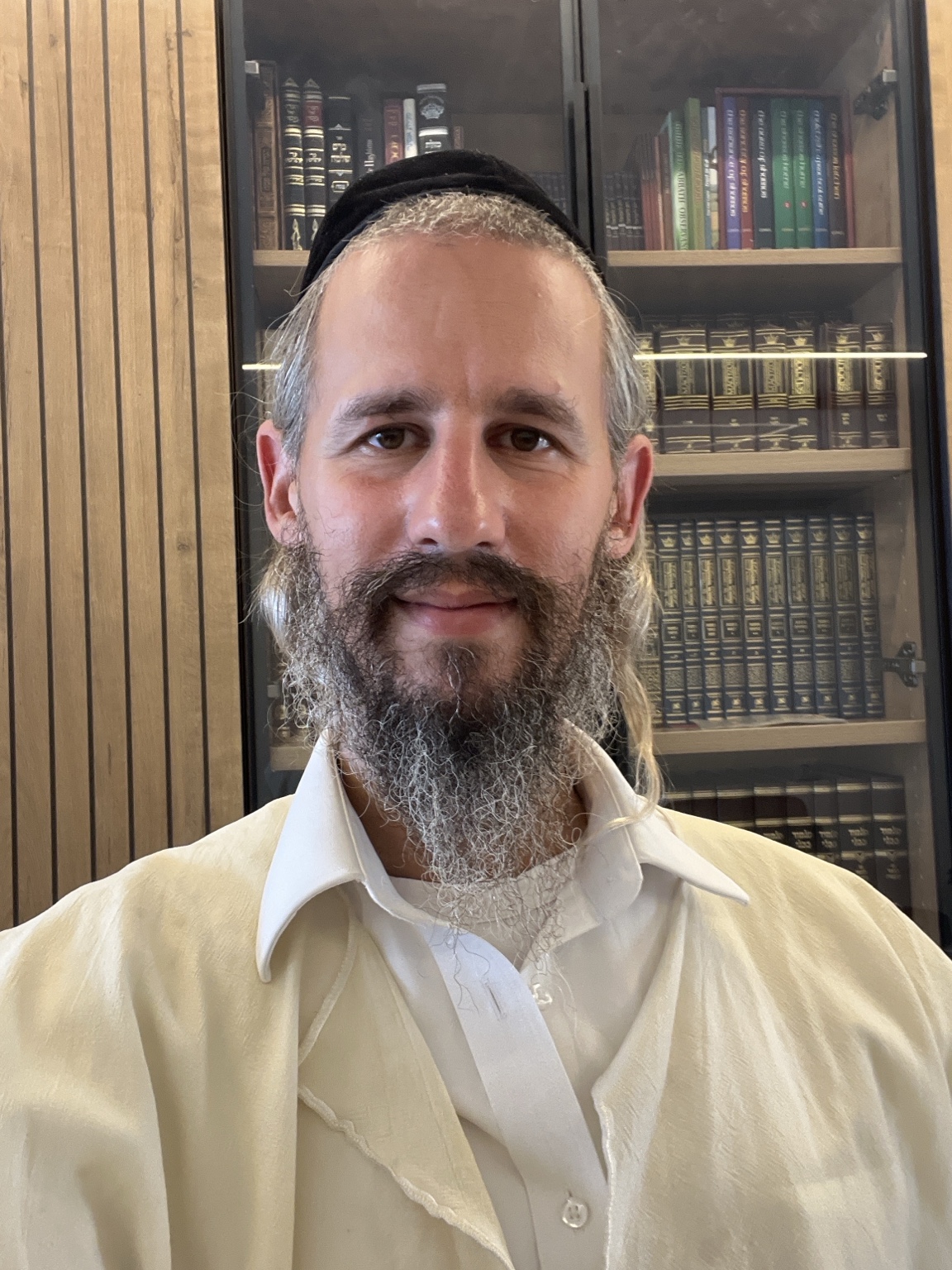
From the outside, my story looked like a good and ordinary heimishe life. And in many ways, it was.
I was born into a frum family, the second of nine children and also a twin. My parents came from France and settled in Stamford Hill, London, because they wanted to give their children a strong, heimishe upbringing.
I followed the familiar path through cheder and yeshiva. I learned in Gateshead and later in the Mir in Eretz Yisroel. At 22, I married my dear wife, Leah. Together, we have grown tremendously and have been blessed with six beautiful children.
That was the picture from the outside.
But beneath that picture, I carried a hidden inner struggle that almost nobody could see.
The struggle nobody saw
My struggle began when I was very young. As a small child, inappropriate boundaries were crossed by an adult. I did not know whom to tell, and I did not have the words or the relationship in which to express what had happened. So I carried the confusion silently.
From those early years, my mind became heavily occupied with matters I was far too young to understand. What began as childhood confusion developed over time into a long and painful struggle around פגם הברית.
It consumed far more time, energy, money and inner space than anyone around me could have known.
Over the years, there were other forms of escape as well: cigarettes, cannabis, alcohol, psychedelics, rapé and an unhealthy relationship with food. They did not all appear at the same time or in the same way, but each offered something—a temporary escape, a different feeling, a way to change the experience of the present moment.
From the outside, life continued. Inside, I was repeatedly looking for something that would allow me not to be exactly where I was.
There was no single cure
I cannot point to one moment, method or programme and say, “That changed everything.” Every crossroad in my life became another journey.
I explored many forms of personal development. I attended seminars, studied different approaches and experienced methods including hypnosis. Some offered useful insights or individual tools, but they did not become the emes or the foundation upon which I could build my life.
One of the early and important crossroads came through my Shver—my father-in-law—and a programme he developed called Mastermind.
I first joined Mastermind while visiting my Shver in America, and I continued working with it for years. It taught me to ask what I wanted, clarify where I was going, and take practical steps in that direction. Over time, it also brought me towards a deeper question: Do I genuinely want the things I think I want?
Mastermind became a significant source of inspiration for what I later developed and now call עבודת הרצון. I have taken much of what I learned from my Shver, rechannelled it through my own journey and spiritual understanding, and developed it into a framework for recognising one’s true רצון and taking consistent steps towards it.
Another immense turning point came through Rabbi Shalom Arush. I connected with Rabbi Arush through his books, seforim and teachings, and I have also been privileged to meet him numerous times. His teachings opened for me a practical and personal relationship with Hashem, helping to place me in check, restore balance and direct me towards a life of personal tefillah, responsibility and hope.
Through Rabbi Shalom Arush, I was introduced to the teachings of his Rebbe, Rebbe Nachman of Breslov—the great tzaddik who is buried in Uman.
Rebbe Nachman lived generations before us, but his extraordinary honesty about the human struggle remains startlingly alive. His understanding of the battles a person faces, his openness regarding matters others are often afraid to discuss, and his insistence that there is no place for despair opened something profound within me.
Approximately eight years ago, something fundamental began to take root in my שמירת הברית. The journey was not one of instant perfection, but Baruch Hashem, since that turning point I have not intentionally returned to the behaviour that had once controlled so much of my life. Today, I feel deeply grateful to be זוכה לשמירת הברית.
Another major crossroad came through Rabbi Yom Tov Glaser and The Possible You. I invited Rabbi Glaser to lead a seminar in London, and that first experience developed into many more. I eventually trained as a seminar leader and went on to lead seminars myself.
Working so closely with people gave me an increasingly deep understanding of what drives us, what blocks us, how we develop survival strategies and why we run from ourselves. It also allowed me to witness the goodness, strength and possibility hidden inside people who could not yet see those qualities within themselves.
Alongside this came growth in שלום בית, learning to become present, developing a more truthful relationship with myself, and deepening my relationship with Hashem.
Slowly, the different pathways began to meet.
Addiction is not an identity
Through my own journey, I came to understand addiction as more than the outward behaviour.
Very often, beneath a survival strategy lies fear—the fear of losing control, rejection, failure or the unknown. Beneath that fear may sit a painful inner story: “I am small.” “I am weak.” “I am lost.” “I do not belong.” “I am worthless.”
The cigarette, substance or compulsive behaviour appears to answer that story. For a few minutes, it can offer relief, belonging, confidence, comfort or escape. But it can never fill the hole permanently, because the story beneath it was never the truth.
Nobody is fundamentally worthless. Nobody is the addiction they have used to survive. Beneath the behaviour is a neshamah—a person who remains precious, meaningful and deeply connected to Hashem, even when he cannot currently feel it.
The work is not merely to remove the outward behaviour. It is to help the true person emerge.
For me, that happened gradually—through presence, רצון, honest inner work, structure, tefillah and learning to remain with Hashem in the moment instead of constantly searching for somewhere else to be.
Freedom is living with Hashem, right here and right now.
Why I am sharing this
I am not sharing my story because I am looking for publicity, and I am not presenting myself as a clinical addiction professional.
I share it because too many Jewish men struggle silently. Too many believe that they are uniquely damaged, that nobody would understand them, or that they must carry their struggle alone.
I know something of that darkness from within. I also know that change is possible.
There was no single derech that brought me here. At every crossroad, Hashem showed me another pathway and gave me another part of the picture. Shvil Me-HaTzad—שביל מהצד—brings those parts together—not as a promise of instant change, but as an invitation to begin walking.
I do not stand above another person, and I am not here to fix him. I see myself as a signpost: someone who has travelled through his own darkness and can now point towards a path that may otherwise remain unseen.
I am the signpost. שביל מהצד is the path.
If you are carrying something silently, you are not ruined. You are not your struggle, and you do not need to pretend here.
You are not alone.
We are breathing this together.